Sony: AI Will Augment PlayStation Creators, Not Replace Them
At a post-earnings Q&A, Sony executives said AI will speed routine work and personalize PlayStation services, while human creators keep final creative control.
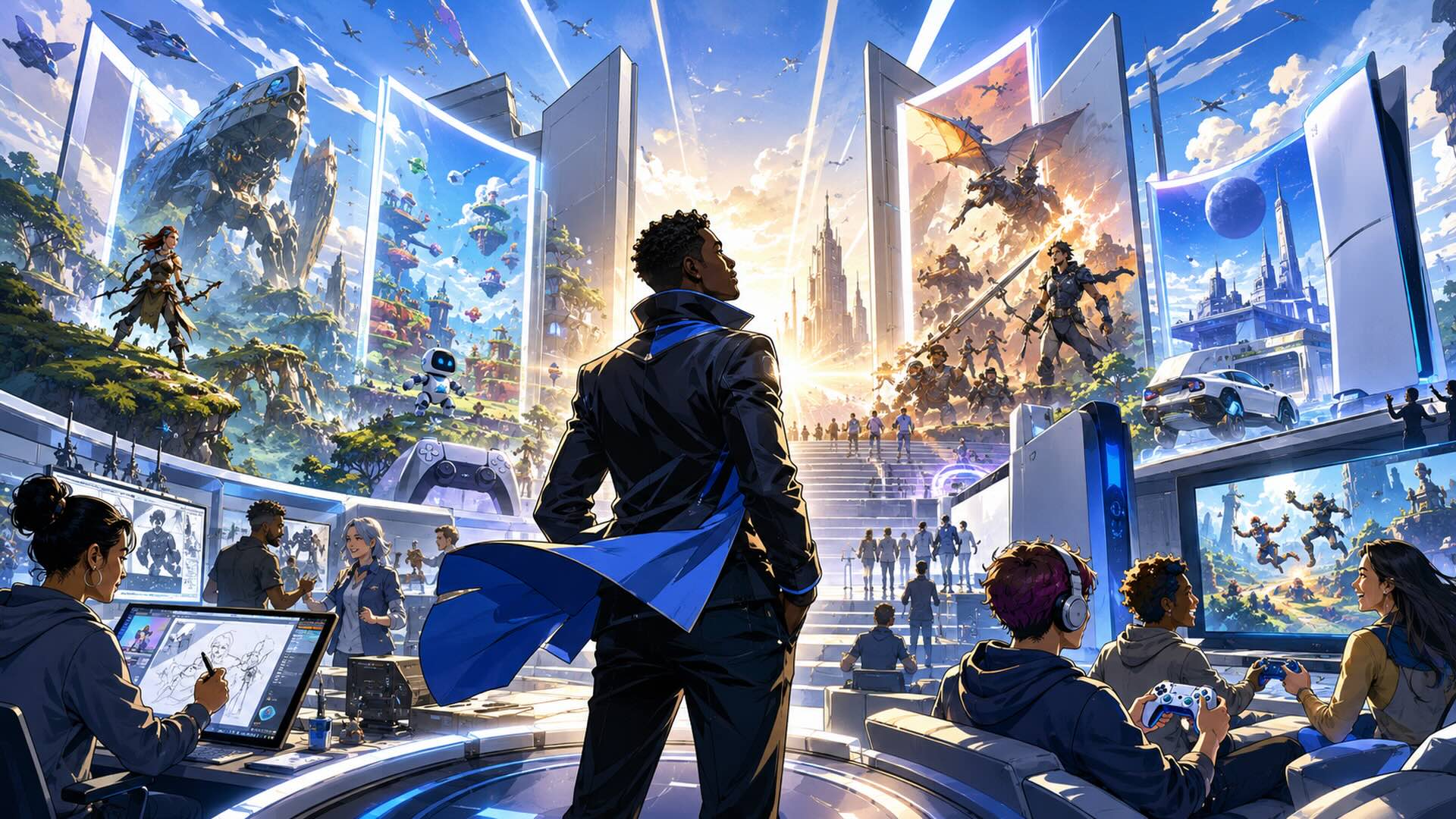
During a Q&A after its latest financial results, Sony outlined how it plans to use artificial intelligence across PlayStation development and services, saying the technology will support creators rather than replace them. Hiroki Totoki, Sony president and CEO, opened the session by saying, “Human creativity must remain at the center,” and added, “AI is a powerful tool, but is not a replacement for artists or creators. It is an amplifier of human imagination and catalyst for new possibilities.”
Hideaki Nishino, CEO of Sony Interactive Entertainment, described specific studio applications. He noted first-party teams are automating repetitive tasks, boosting software engineering productivity and accelerating quality assurance, 3D modeling and animation through machine-learning tools. As an example, he highlighted Mockingbird, a proprietary system that uses performance capture to animate 3D facial models, cutting hours of manual animation work. Naughty Dog and San Diego Studio have adopted the tool, and it has been used in Horizon Zero Dawn Remastered.
Nishino outlined another workflow for hair creation that starts with video of real hairstyles. An AI process converts those videos into 3D hair models composed of hundreds of strand elements, reducing manual effort so teams can spend more time on game design and storytelling. He said these practical tools free developers from routine tasks.
Turning to gameplay, Nishino pointed to Sophy, the AI driver in Gran Turismo 7, as an example of technology creating new challenges for players. He distinguished those uses from generative systems that produce new creative content, stating the vision, design and emotional impact of games will come from studio talent. “AI is meant to augment their capabilities, not to replace them,” he added.
Sony also described consumer-facing uses of machine learning. Nishino explained the company is enhancing PlayStation Store recommendations to personalize choices at scale, with future models that could suggest not only the next game a player might enjoy but also a likely gameplay moment, subscription, accessory or piece of merchandise that matches a player’s interests. The company noted recent improvements to PlayStation Scaling Resolution (PSSR) upscaling as an AI-driven enhancement that improves visuals and performance for PS5 Pro owners.
Executives acknowledged broader business pressures. Totoki warned that memory shortages and geopolitical complexity have complicated supply chains and said the company must adapt. “We cannot rely on assumptions that have supported us in the past,” he said.
Executives indicated Sony will continue investing in in-house AI tools for development pipelines and consumer personalization, while maintaining that final creative decisions remain with human creators.
The content on our website is provided for informational purposes only. We strive to keep our news accurate and up to date, but we cannot guarantee its completeness, reliability, or absolute accuracy.
ps5.news is not responsible for any errors, omissions, or decisions made based on this content. Any actions you take after reading our materials are at your own risk. Always verify important information through official sources where possible.
Articles by this author