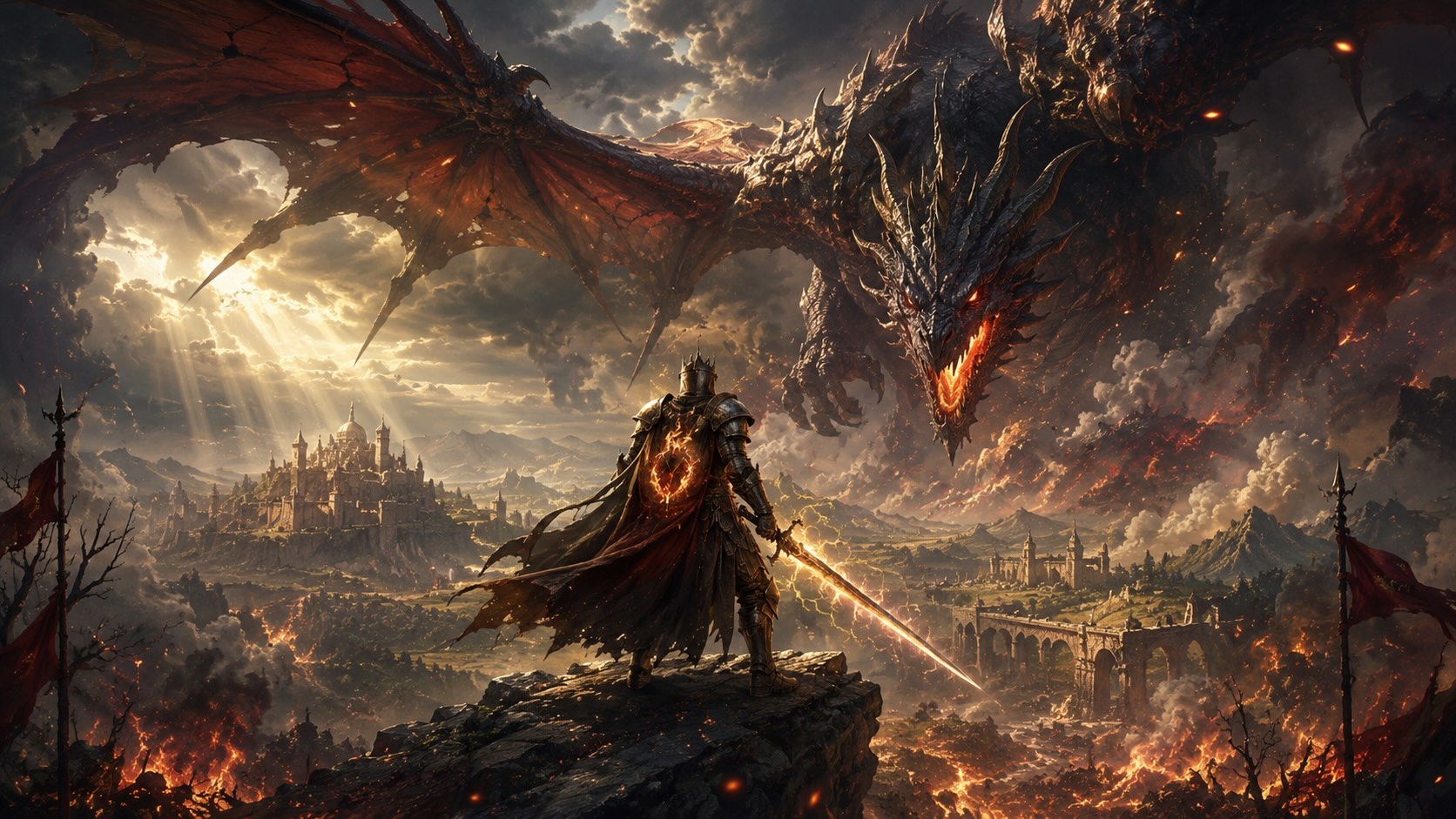
Housemarque rebuilds NGP into Graphite for Saros
Housemarque rebuilt its NGP particle engine into Graphite for Saros, unifying GPU simulation, rendering, Houdini pipelines and two volumetric fog systems on PS5.
Housemarque rebuilt its long-running Next-Gen Particles (NGP) system into a single framework called Graphite for the game Saros. Graphite combines GPU simulation, rendering, tooling and digital content creation (DCC) integration and is designed to run on PlayStation hardware.
NGP began as a Resogun prototype in 2013 and was used through Returnal. For Saros, developers replaced a decade of incremental changes with a unified architecture aimed at consistent workflows and real-time performance on base PS5 hardware.
Graphite implements two volumetric fog systems. The low-frequency system uses a froxel grid, a camera-aligned voxel layout, adjusted for faster temporal response with a lower hysteresis value, blue-noise jitter and depth clamping to reduce aliasing. It employs a dual Henyey-Greenstein phase model for forward and backward scattering, a coloured absorption coefficient for a wider colour range, an aggregated self-shadowing direction with ray-marched shadows, and a sky lighting integral for distant illumination. A player-following fluid simulation advects density into the low-frequency volume so movement, projectiles and explosions alter the fog in real time.
The high-frequency system is a custom ray marcher for fine detail. Scatter data is grouped into 8x8x8 voxel clusters; the marcher only processes clusters containing data and skips empty regions. Lighting is handled via light volumes per scatter volume, with pre-marched self-shadowing inside each light voxel. Artists can tune albedo, absorbance, density and shadowing per volume. During rendering the high-frequency marcher samples scatter from the low-frequency fog and writes results back so both layers remain consistent.
Housemarque applied the high-frequency fog to narrative set pieces such as a smoky skull in the prologue and rotating mirage rooms across several biomes. Impact data is stored in a separate low-resolution volume that also holds the low-frequency velocity field. Impacts are represented as signed distance fields that close over time; velocity visualizes induced turbulence. A real-time skeletal mesh voxelizer brings existing meshes into mirage scenes and the studio blends voxelized and advected data for the final effect.
Graphite extends particle workflows with two artist tools: an offline Houdini pipeline that precomputes complex point and spline data, and a runtime point-cloud rasterizer that converts simulated points to volumes in real time. Artists export particle and spline data from Houdini; at runtime Graphite uses those points as targets while re-simulating motion and interactions. The player spawn sequence uses Houdini-generated splines treated as particles, Marching Cubes to create viscous surfaces, volumetric fog emitted from splines and spark particles that collide with the player using a signed distance field from the player’s collision capsules. All elements run at 60 frames per second on base PS5 with no baked simulations and support randomized spawn variations.
Housemarque intends to use Graphite in future projects and to continue developing its tools and pipelines for PlayStation titles.
The content on our website is provided for informational purposes only. We strive to keep our news accurate and up to date, but we cannot guarantee its completeness, reliability, or absolute accuracy.
ps5.news is not responsible for any errors, omissions, or decisions made based on this content. Any actions you take after reading our materials are at your own risk. Always verify important information through official sources where possible.
Articles by this author